
LIBER Conference 2026: Building Future-Fit Libraries Between Openness and Security
From improving the discoverability of open textbooks and AI-powered FAQ chatbots to new models of leadership in libraries: at this year’s LIBER Annual Conference in Trondheim, library professionals from across Europe discussed how academic libraries can position themselves for the future in an uncertain world. Colleagues from the ZBW took part with their own contributions and look back at a selection of programme highlights in this blog article.
by Timo Borst, Arben Hajra, Christiane Müller, Tamara Pianos and Susanne Schmucker (ZBW)
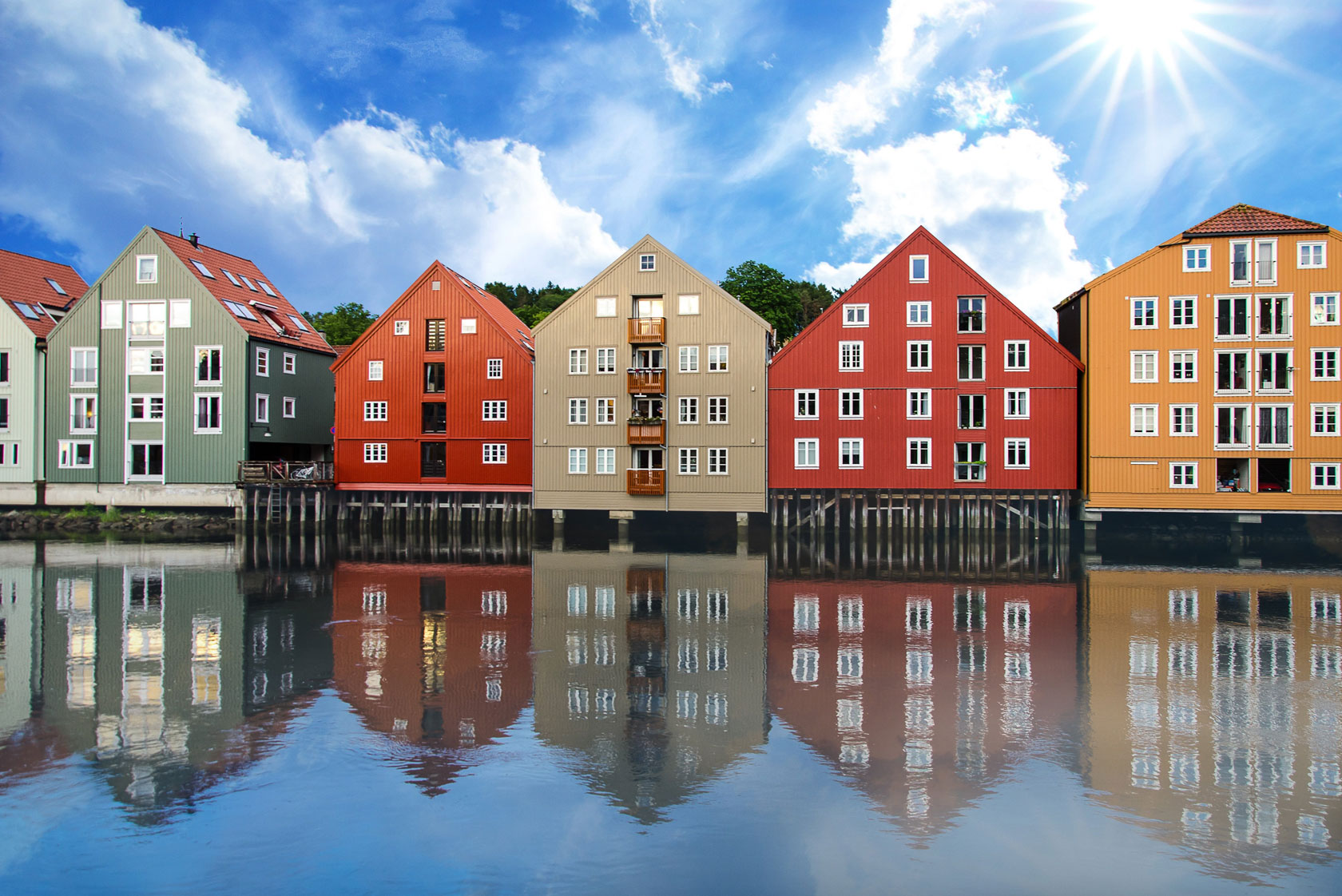
The LIBER Annual Conference brings together representatives from academic libraries across Europe to learn together and from one another. Held under the theme “The Power of Libraries in an Uncertain World”, this year’s 55th Annual Conference took place from 1 to 3 July at NTNU University in Trondheim, Norway. The conference was characterised by a remarkable breadth of topics. Naturally, artificial intelligence took centre stage, but political issues were just as prominent, with questions of security, the current geopolitical climate and censorship clearly weighing on the assembled library community. Several colleagues from the ZBW – Leibniz Information Centre for Economics helped shape the programme and took part in workshops and talks. In this blogpost, they share some of the content and their impressions.
Making Open Textbooks Easier to Find and Access
Workshop 1.4 | LIBERating Metadata Flows to Improve Findability of European Open Textbooks and Exploring Tools to Improve Advocacy and Adoption, run by the Educational Resources Working Grouplooked at how to find suitable Open Educational Resources (OER), particularly open textbooks, the links between OER and AI, and, finally, ways of measuring success. The key question was which discovery systems and metadata could make existing OER easier to find. A partnership with Thoth Open Metadata was discussed as one possible option.
During the workshop, participants examined two different discovery systems and assessed their functionalities, noting both strengths and shortcomings as well as any missing features. Criticisms included, for instance, imprecise filter functions and the absence of an option to filter by licence.
The intersection of OER and AI raises plenty of questions worth exploring. AI tools, for example, can help create or translate OER, and can even be used to build AI tutors for OER or to identify suitable OER that could replace commercial textbooks. Yet while the potential applications seem vast and promising, practical experience so far suggests the anticipated time savings have not fully materialised.
Finally, discussion turned to how the use and visibility of OER might be measured. As next steps, the working group plans to identify open textbooks – including those in languages other than English – disseminate materials that support better use of OER, and explore a potential partnership with Thoth.
Shaping and Planning AI Futures Together
Workshop 2.2 | Imagining and Co-creating LIBER’s AI Futures: A World Café for Futures Thinking and Strategic Priorities explored six themes, each at its own table: Copyright, Law & Ethics, Security & Infrastructures, AI Literacy, Applications (Why not How), Networking Within & Beyond LIBER, and Dreams and Nightmares. Over three 15-minutes rounds, participants first pinned down a focus for each theme, then dug deeper into individual aspects and drew out connections across tables. The closing discussion centred on how each theme could be taken forward within LIBER. Discussions at the tables were lively – occasionally heated – and engagement ran high throughout. Six posters captured the key findings, which will now feed into the work of the AI Task Force and serve, among other things, as input for a position paper.
From Research Project to FAQ Assistant
In a further poster session, ZBW staff members Arben Hajra and Timo Borst presented the current state of their chatbot development, which has since gone live as the FAQ assistant (beta) within ZBW’s production environment.
Skip to PDF contentBuilt on Mistral’s open-weight model Nemo and a Qdrant vector store, and developed in close collaboration with ZBW’s information services, the tool is a natural-language information service as a RAG (Retrieval Augmented Generation) limited to FAQ content relating to EconBiz and the ZBW.
From Structure to Strategy: Future-Proof Teams at the UAB
Alongside the highly topical issues mentioned above, there was also room for a few “classics”. Of particular interest was the “Leadership for the Future” panel, which focused on organisational development. Several talks explored how libraries can position themselves for the future, both organisationally and in terms of what they offer. Two practical examples stood out.
Núria Casaldàliga Rojas and Anna Florensa Farré from the Universitat Autònoma de Barcelona (UAB) presented a four-year strategic project through which the UAB libraries fundamentally reorganised their structure. For years, the library system had consisted of seven subject-specific libraries operating independently of one another, with central services limited mainly to IT support. The goal was to strengthen this central unit and make better use of existing staff.
The project began with detailed data collection and analysis: which tasks would disappear, which new ones would emerge, and how these mapped onto job profiles. On this basis, staff were redeployed and, in some cases, retrained; job profiles were updated; and new roles were created in areas such as research data management and user experience design.
The speakers spoke openly about the difficulties they encountered along the way – not least the period when the university’s leadership put the implementation on hold. The sheer number of questions this raised showed just how common such experiences are, and how valuable it is to talk about them openly.
Beyond Hierarchy, Within Responsibility: Ethical Leadership at the ZHAW
ZHAW in Zurich took a rather different approach: Gabriela Lüthi-Esposito explained how the library is adapting to a changing world by putting people first – those who have to respond to new challenges – and by stripping away any structures that get in the way.
Drawing on the Holacracy model, the organisation is working towards operating without formal hierarchies. Instead, roles and responsibilities are defined, and decision-making powers are distributed more widely. Work happens in interdisciplinary teams built around a shared task, meaning staff can take on different roles across several teams at once. Leadership still matters in this model: alongside legal responsibility for budget and staff, leaders shape the framework within which teams operate and ensure they can do their jobs effectively.
Here, too, there was critical reflection, and it was acknowledged that such a far-reaching process of change takes a great deal of time – not least because everyone has to adjust to new expectations, such as far more communication in every direction. This can lead to a phase where people feel overwhelmed, as more self-organisation and decisiveness are asked of everyone, and teams are expected to resolve conflicts on their own.
The Future of Open Science in a World of Increasing Conflict
Kenneth Ruud’s keynote offered a compelling look at the opportunities and risks facing Open Science at the intersection of openness and security. In an increasingly conflict-ridden world, he argued, Open Science faces new challenges: scientific openness is now more closely tied to questions of national security than ever before. Open Data can drive progress, but it can also be misused – which is why the value of one’s own research needs to be considered through a security lens as well.
At the same time, Ruud warned of mounting pressure on the scientific system, from hard-to-verify studies and “paper mills” to AI-generated publications. Even so, he maintained, the system isn’t broken – it simply needs targeted reinforcement. Another growing risk lies in disinformation, misinformation and “malinformation” – true information taken out of context or deliberately weaponised to cause harm. These don’t just shape public debate; they also feed into the AI systems trained on such data. Counter-strategies are already emerging, for instance in the form of national AI models built on reliable data. Ruud’s appeal: international collaboration and Open Science remain essential, but must be pursued responsibly – with a clear line drawn between scientific evidence and political interpretation.
Supporting Data Curation Through Automation at KU Leuven
Dieuwertje Bloemen (KU Leuven) offered a practical look at the (partially) automated curation of research datasets. The focus was on the Research Data Repository (RDR), launched in 2022, which helps researchers ensure the quality of their datasets. The approach involves standardised, rule-based checks handling recurring tasks such as the validation of metadata, file formats or licence details. Automated feedback supports researchers even before they submit their data. At the same time, manual review remains indispensable – for example, when it comes to ensuring that descriptions are clear and understandable.
Bloemen made it clear that complex AI solutions were deliberately avoided. Instead, KU Leuven relies on rule-based automation (Python scripts). This lowers the barriers to entry, is easier to maintain, and is considerably more sustainable – all crucial for a low-threshold implementation. The biggest challenge, Bloemen noted, lies less in the technology itself than in researchers’ day-to-day reality: limited time, mounting pressure to publish, and little attention paid to data management. Automated self-checks offer a way forward here, catching quality issues early – well before datasets are ever submitted.
This text was translated from German using AI and subsequently reviewed by an editor.
You may also be interested in:
- Highlights of the LIBER Annual Conference 2026
- Information provision for economic research: AI agents, open data and new roles for libraries
- Study on AI and Open Educational Resources: Strategic Relevance or Individual Motivation?
- AI in libraries: How libraries can fulfil their responsibilities
- Barcamp Open Science 2026: Overcoming Challenging Times
Dr Timo Borst is head of the Innovative Information Systems and Publishing Technologies department at the ZBW – Leibniz Information Centre for Economics. He researches open bibliographic data and systems that serve their creation, processing, standardisation and linking. He can also be found on LinkedIn and ORCID.
Portrait: ZBW©
Dr. Arben Hajra has been working at the ZBW – Leibniz Information Centre for Economics since 2018 and currently holds the position of Senior Researcher. Prior to this, he spent more than 14 years at the South East European University in North Macedonia, where his roles included Lecturer and Adjunct Assistant Professor. He obtained his PhD in Computer Science from the University of Kiel. Arben is Co-Chair of the LIBER Data Science in Libraries Working Group. His research interests include artificial intelligence, machine learning, knowledge graphs, information retrieval and databases. He can also be found on LinkedIn.
Portrait: Arben Hajra©
Christiane Müller has been Library Director at the ZBW – Leibniz Information Centre for Economics since March 2026. Prior to this, she was Head of the Library for international scholarship holders at THE NEW INSTITUTE in Hamburg. She holds a law degree with a specialisation in copyright law; she has been working in the library sector since completing her library traineeship in 2015. She can also be found on LinkedIn.
Portrait, photographer: Sven Sindt©
Dr. Tamara Pianos studied geography and English language and literature. Following her PhD in Canadian studies and a trainee programme as an academic librarian, she worked at the TIB in Hanover. Since 2005, she has been working at the ZBW – Leibniz Information Centre for Economics, where she currently heads the Information Provision Department. She is the product manager for the EconBiz portal and is responsible for information literacy issues. She can also be found on LinkedIn.
Portrait: ZBW©, Fotograf: Sven Wied
Susanne Schmucker has been working at the ZBW – Leibniz Information Centre for Economics since 2009. Since October 2025, she has headed the Collection Development and Metadata programme area. Drawing on her background in economics, Susanne Schmucker combines expertise in knowledge organisation, metadata management and information services with the aim of translating access into the sustainable usability of economic information. She can be found on LinkedIn.
Portrait, photographer: Kaja Grope© ZBW©


The Ideal Place for Students to Learn: Results of a ZBW Photo Study

Open Science Strategy: TU Delft Aims at the Pole Position for the Open Era

EdTech KreativHack: Work on EdTech – and Learn a Lot
View Comments
Open Economics Guide: More than 160 Open Science Tools – Now Much Easier to Explore
The ZBW Open Economics Guide now features more than 160 useful Open Science tools for...