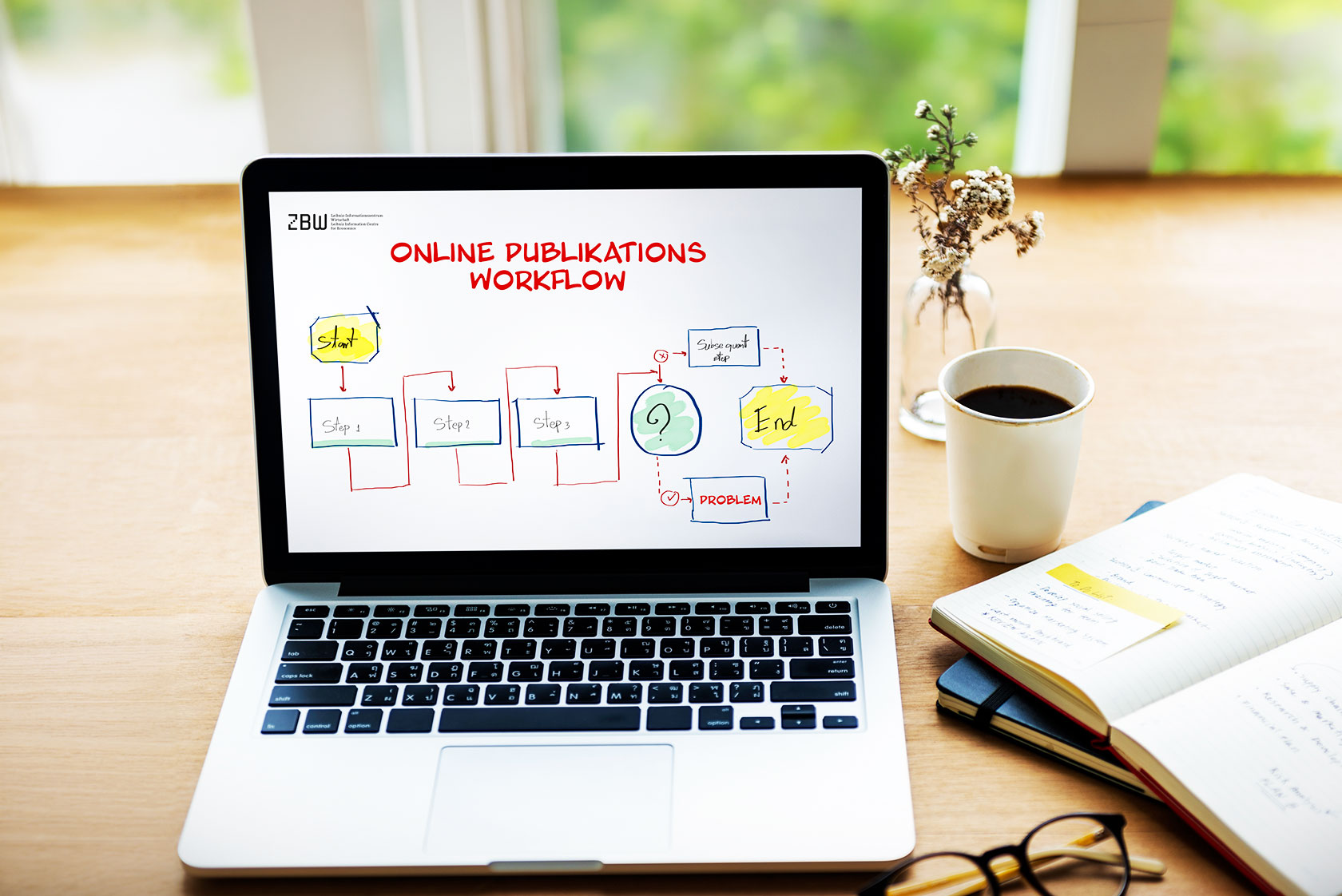
Workflow Management Software Instead of Routing Slips: The Shift Brings Greater Transparency and Efficiency
When existing workflows can no longer keep pace with an increasingly complex environment, it is time to rethink things from scratch. Two key players from the project describe how they successfully switched from mail-based workflows to workflow management software at the ZBW – Leibniz Information Centre for Economics. In this interview, they highlight the requirements – such as the ability to use the system without any programming knowledge – and share tips on how to successfully implement the software.
by Stefanie Falck and Anna Pläp (ZBW)

Given the sharp rise in the number of online publications, established processes relying on email task lists had reached their limits. Implementing a workflow management software should therefore make the work more efficient, transparent and straightforward.
Stefanie Falck and Anna Pläp from the ZBW – Leibniz Information Centre for Economics report on their in-depth examination of various software options and how they managed to model highly specialised and complex workflows in software that was not originally designed for this purpose.
What were the reasons for introducing a workflow management system?
Until now, we have managed the processes for online publications using routing slips sent by e-mail. In recent years, the volume has grown rapidly – the vast majority of the publications we acquire are now online. Alongside the volume, the complexity has increased as well, with differences in legal requirements and storage criteria.
When processing via e-mail routing slips, staff members had to be aware not only of their own tasks but also of those in subsequent stages in order to forward the e-mail to the correct department. Once a routing slip had been sent, it was no longer possible to track its whereabouts or the status of its processing. By and large, we wanted to make our processes more efficient, transparent and straightforward.
How did you go about making your selection? What were the requirements?
It was important to us to be able to model the workflows ourselves within the departments without needing in-depth programming skills. As we require specific details for our processes – such as publication titles, identification numbers or keywords for content indexing – we need customisable forms and the ability to create forwardings based on the information provided.
We drew up a list of requirements, searched online for suitable software and compared it against our criteria. Where these were met, we used a trial version to assess how useful the software would be for us. This process took several years. After a long search and extensive testing, the SmartProcess software met all our criteria, proved most convincing in practice and, overall, offers good value for money for our purposes.
How did you go about implementing it?
To begin with, we came together as a project group and received training from the supplier. Even though no programming knowledge is required, you obviously have to familiarise yourself with the subject matter to understand how the individual fields and settings are linked and influence one another. SmartProcess is not library-specific software, so we had to rethink some aspects to suit our needs. In the next step, we looked at our workflows and considered how to implement them in SmartProcess. A one-to-one implementation wasn’t always practical, as SmartProcess opens up new possibilities.
When implementing the first workflows, we initially involved a test group to trial the process in a real-world working environment. This provided us with a great deal of valuable feedback, allowing us to adapt the workflows before releasing them for use. For the roll-out, we first trained the respective colleagues and made sure they had the option to ask questions and suggest improvements at any time.
What challenges did you face during implementation?
Although the provider offered training, we had to work out a lot for ourselves and engage intensively with the software, as our complex workflows do not correspond to the standard cases for which such software is usually designed.
It wasn’t always possible to implement everything exactly as we had envisaged, and at times during the roll-out process we realised that some decisions and workflow settings might not be as practical as we’d thought. There were also many requests and suggestions for adjustments from our colleagues, which always required careful consideration as to whether and how we could implement them.
Furthermore, the time required to set up the workflows and implement the software should not be underestimated.
What experiences have you had since the roll-out?
New software initially involves a shift away from tried-and-tested methods. That isn’t always easy and takes time. We’re still relatively early on in the roll-out, but our experience with the software so far has been very positive, both within the project team and amongst staff. Everything is now clearer and more transparent, and being able to link workflows together has also made many things much simpler.
Naturally whilst setting it up and using it, we’ve also come across things we’d actually prefer to be different, but so far we’ve found a solution for everything within the software. We’ve learnt a great deal, both in terms of the software itself and in project management.
What advice would you give to other libraries or organisations?
The introduction of workflow management software should be carefully prepared. Criteria and requirements should be defined, and different solutions should ideally be tested by several people from different areas of the organisation so that different perspectives and experiences can be taken into account. It is also crucial to keep staff informed before and during the roll-out and to involve them at an early stage, for example through a test group. Even after the roll-out, staff should have the opportunity to voice their wishes and make suggestions for improvement. This increases acceptance of new software and gives staff the feeling that they can help shape the process. Furthermore, sufficient time should be allowed between deciding on a software solution and its implementation, as the roll-out is usually more complex than anticipated. However, if everything is well documented, a complex undertaking such as a software roll-out can be successfully managed and, in our view, is well worth the effort.
You might also be interested in:
- AI in Libraries: How Libraries can Live Up to Their Responsibilities
- 24/7 Opening of University Libraries: New Flexibility for Concentrated Work Leads to Record Start
- Promptathons: Potential for Libraries – and for Open Science?
This text has been translated from German.
Stefanie Falck is a research officer in the Collection Management department at ZBW – Leibniz Information Centre for Economics, working for the UK division. She has been coordinating the roll-out of the workflow management software SmartProcess within the Collection Development and Metadata programme area from the outset.
Portrait: Credit: Ramboll Management Consulting©
Anna Pläp works at the ZBW – Leibniz Information Centre for Economics in the integrated acquisition and cataloguing of periodicals and in user services. She has been involved in the introduction of SmartProcess since the software selection stage and is continuously supporting the project in the technical implementation of the workflows.
Portrait: Carola Ziebart©

INCONECSS 2022 Conference: Artificial Intelligence, Open Access and Data Dominate the Discussions

User Experience for Libraries: Insights from the University Library of the Cergy Paris University

Human-Centred AI: First Steps for the Enrichment of Library Work
View Comments
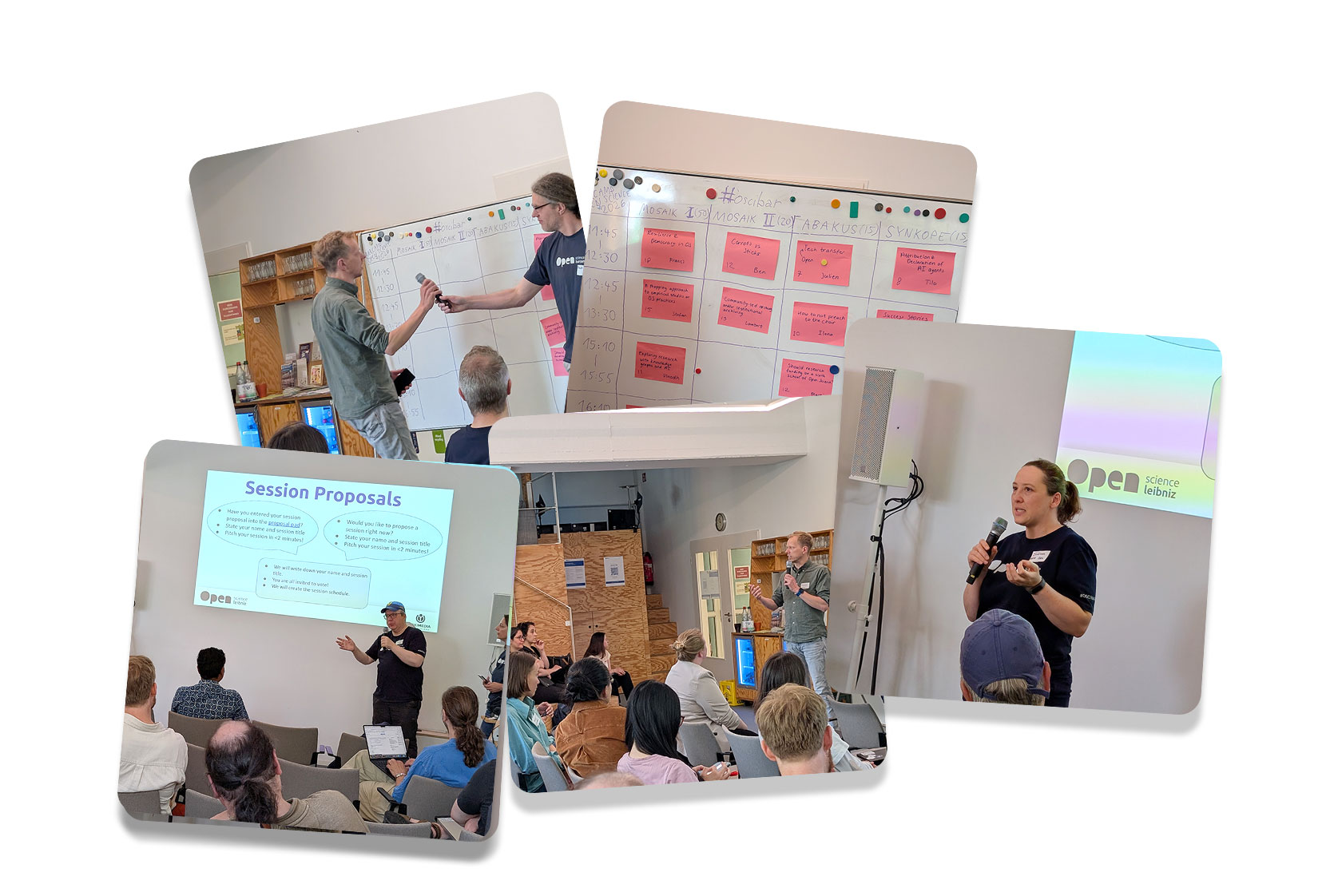
Barcamp Open Science 2026: Navigating Challenging Times
The resilience of Open Science and the attribution and disclosure of AI were,...