Future Agenda for Science 2040: Instrumentalised Research or Germany as a Science Republic?
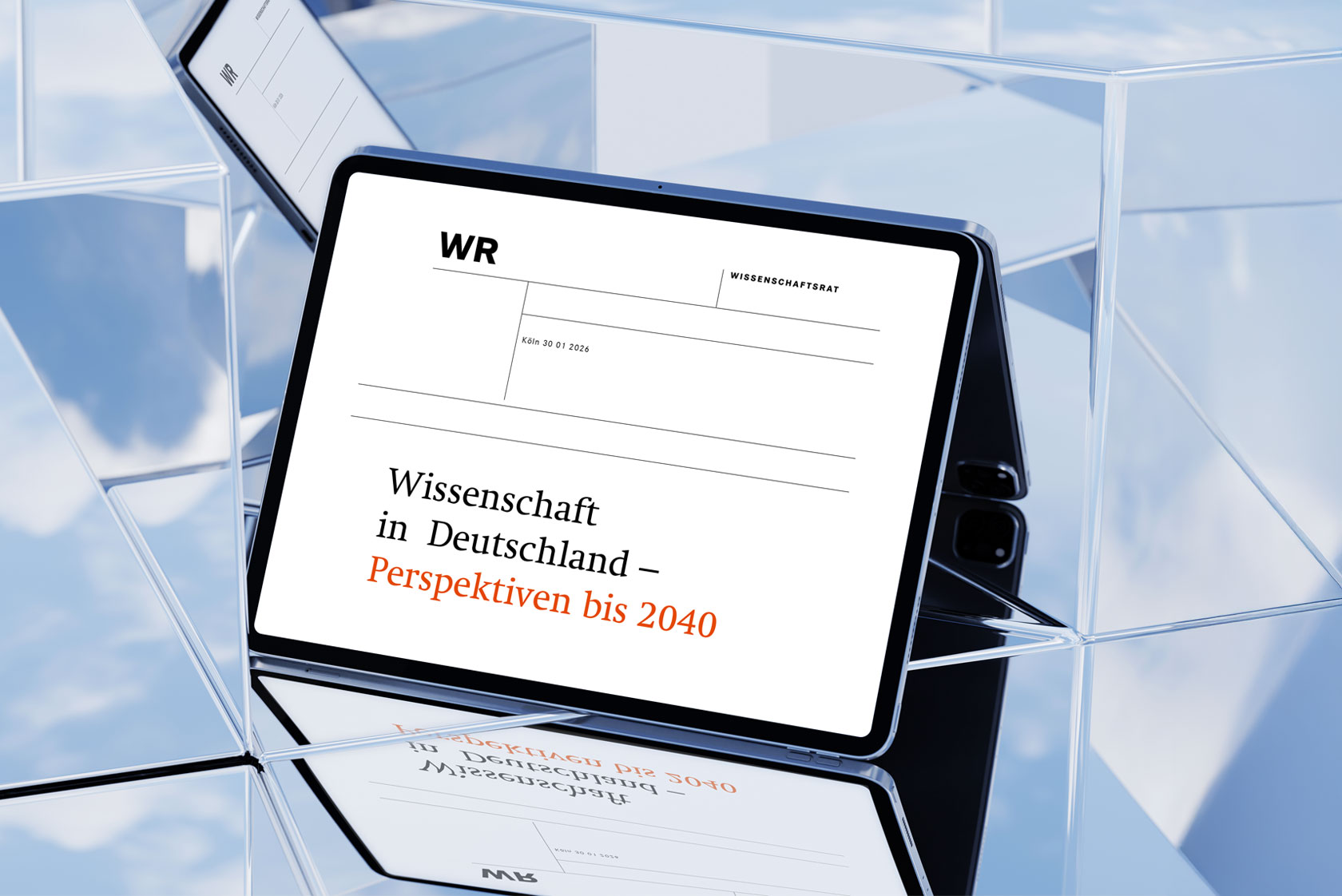
In response to rapid, partly unpredictable and at times disruptive change in global science, the German Science and Humanities Council has published a new paper. Its aim is to prepare institutional structures in education, research and innovation for the years ahead. “Science in Germany – Perspectives until 2040” sets out a future agenda for Germany as a centre of science. This blog post outlines the scenarios described in the paper and highlights those recommendations that are particularly relevant for libraries and Open Science.
by Birgit Fingerle (ZBW)

On 30 January 2026, the German Science and Humanities Council (Wissenschaftsrat, WR) published its future agenda for Germany as a centre of science and research, entitled “Science in Germany – Perspectives until 2040” (German language: “Wissenschaft in Deutschland – Perspektiven bis 2040“). The paper provides a strategic framework to help actors across the science system continuously reflect on and adapt their actions in the years ahead.
Six developments are already reshaping the conditions for education, research and innovation. They affect key areas of society: shifts in global politics, declining economic competitiveness, global crises and the need for ecological transformation, demographic change, rapid technological advances, and accelerated social change. These developments create opportunities, but they also carry the risk of pushing systems towards tipping points. Above all, they highlight how valuable — and how fragile — the foundations of free education, research and innovation are.
Target vision for 2040: A model for free science
The paper sets out a target vision for the year 2040. In brief, Germany is to be a globally visible and competitive centre of science. It should be characterised by cutting-edge research, high-quality education and strong societal impact. At the same time, it is intended to serve as a model of free and robust science.
At the heart of this vision are scientific commons. They are described as a key success factor and the backbone of an autonomous science system. These commons include physical and technical infrastructures, secure, transparent and interoperable digital tools, and sovereignty over data and publications. Together, they enable researchers across Germany to use state-of-the-art tools and infrastructures beyond institutional boundaries.
Four scenarios for 2040
Using scenario techniques, four possible futures for the year 2040 were developed. These are not forecasts. Instead, they are intended to help assess the opportunities and risks of uncertain developments and to support early strategic decision-making.
The four scenarios at a glance:
Science Republic: By 2040, Germany has become a knowledge-based society in which research and education have top priority. Despite tight public budgets, government funding has been strongly redirected towards science, almost doubling the share of R&D expenditure in GDP. Researchers benefit from stable core funding and are not steered by performance indicators. Internationally, Germany acts as an influential advocate of Open Science.
Instrumentalised science: In this scenario, a small number of large technology companies shape German science by controlling access to funding through data and AI models. The state has largely withdrawn from research funding, leading to widespread resource shortages. Public research is politically directed, while private investment follows economic interests. Scientific freedom is restricted. Basic research loses ground to market-oriented projects, and opaque power structures foster authoritarian tendencies.
Situational science policy: In 2040, science plays only a limited role in shaping Germany’s future. R&D expenditure sits in the middle of the international range, and the target of 3.5 per cent of GDP is not met. Research competes with other policy areas for scarce resources, while public interest remains low. Political support is short-term and ad hoc, making long-term strategies and reliable funding difficult.
Global Research Area: By 2040, Germany is part of the Global Research Area (GRA), an organisation that emerged from the European Research Area and includes more than 40 member states. The GRA pools resources to address global challenges such as climate change. It is governed by a multinational council and operates through a complex multi-level system. While a common research policy exists, national differences persist. One key advantage is the joint funding of large-scale research infrastructures.
Ten key areas of action
The agenda identifies ten central areas for action:
- Accompanying and actively shaping social change
- Contributing to prosperity
- Increasing the capacity for action in science and innovation policy
- Profiling, investing and consolidating with determination
- Modernising education – personalising teaching
- Conceiving science as interprofessional teamwork
- Increasing social permeability, mobilising potential
- Modernising and sustainably securing infrastructures for science
- Investing in security through knowledge
- Developing global appeal with reliable partners
Selected recommendations for action
Each area of action is linked to concrete recommendations for policymakers and the science community. These include further developing criteria and procedures so that incentive, funding and evaluation systems visibly reward societal impact and practical relevance.
Research institutions are also encouraged to embed teamwork more firmly in academic practice. Collective achievements should receive greater recognition in career paths and evaluation processes.
The paper further recommends introducing differentiated career paths and personnel structures. These should offer permanent development and advancement options alongside professorships. Departmental structures with flat hierarchies and clear responsibilities are proposed, alongside targeted measures to prevent abuse of power.
Finally, the agenda calls for closer cooperation between science policy and scientific actors within European decision-making and coordination structures, particularly in the fields of infrastructure and digitalisation. This includes the development of shared data spaces, common standards and clear access rules.
You may also be interested in:
- Science in Germany – Perspectives until 2040, January 2026 Wissenschaft in Deutschland – Perspektiven bis 2040, Januar 2026 (German language)
- Innovations, Open Science & libraries: 10 tips for conferences & events in 2026
- AI in libraries: How libraries can live up to their responsibilities
- Promptathons: Potential for libraries – and for Open Science?
- Libraries in the shareconomy: How to seize opportunities
Birgit Fingerle holds a diploma in economics and business administration and is among other things involved in ZBW MediaTalk and innovation management and is part of ZBW’s equal opportunities team. Birgit Fingerle can also be found on LinkedIn.
Portrait, photographer: Northerncards©


Online Events: Mastering Hurdles on the Path to a Digital Future – the Example of the YES! 2020
INCONECSS 2022 Conference: Artificial Intelligence, Open Access and Data Dominate the Discussions

Digitisation of Higher Education: Systemic Framework Conditions and influencing Political Factors
View Comments

SeDOA Workshop: Financing Diamond Open Access in the Long run
How can Diamond Open Access journals be financed permanently? This question was the...