Open Science Happy Hour: A Cocktail Recipe Makes Good Research Tangible
How do you introduce a topic like Open Science at an academic conference without making it sound like just another agenda item? And how can you discuss transparency, replicability, and documentation in a way that goes beyond a mere appeal? At the conference held by the VHB, a professional association for business scholars, these questions were answered with an Open Science Happy Hour in March.
by Doreen Siegfried (ZBW)

How do you convey a science policy topic to researchers at the end of a long conference day, after presentations, panels, and many discussions? To what extent can libraries contribute to this? At the VHB Conference, the conference of the Association of University Professors of Business Administration, held in Göttingen on March 18, 2026, this question was addressed through a format that combined information, exchange, and experience: an Open Science Happy Hour.
Bringing Open Science to Life as a Research Practice
The idea behind this was to present Open Science not merely as a science policy agenda, but as a research practice that directly impacts the daily work of researchers. This topic is gaining particular significance in the field of business administration. Researchers who document their work in a traceable manner, make methodological decisions transparent, and present results in a way that allows others to verify or reproduce them contribute to a more open and robust knowledge production. At the same time, this very question often remains abstract in everyday practice. Although the terms are familiar to many, their practical implications are often less clear.
This is where the Open Science Happy Hour (German Language) came in. Instead of relying on the traditional format of a lecture session, it translated key concepts of Open Science into a concrete experience. The format was developed by the co-authors of the travel guide Expedition Open-Science-Land: Professor Dr Marko Sarstedt and Dr Susanne Adler from LMU Munich, Dr Doreen Siegfried from ZBW – Leibniz Information Centre for Economics, and Dr Meikel Neumann from Leuphana University Lüneburg.
A Journey Through Open Science Land
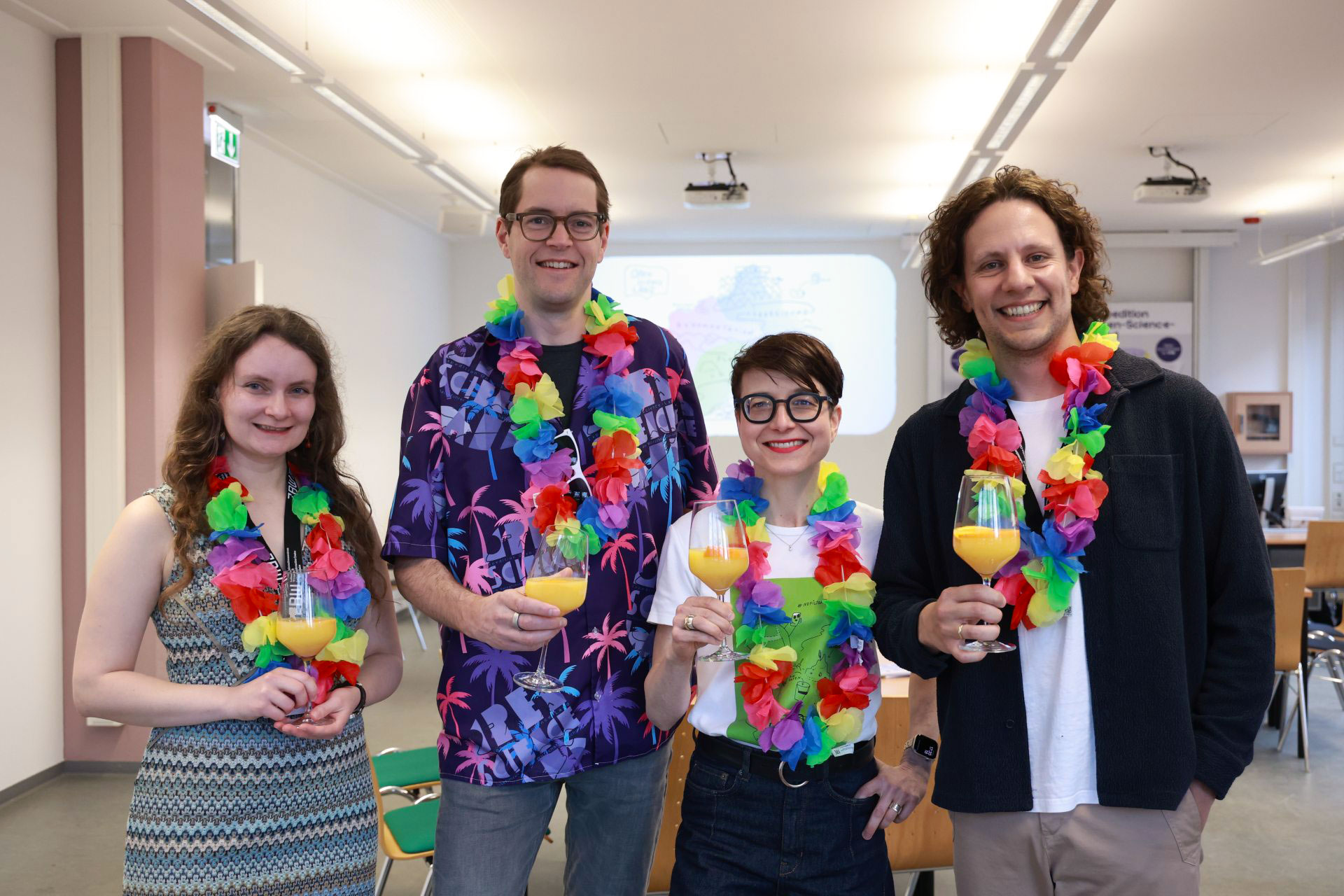
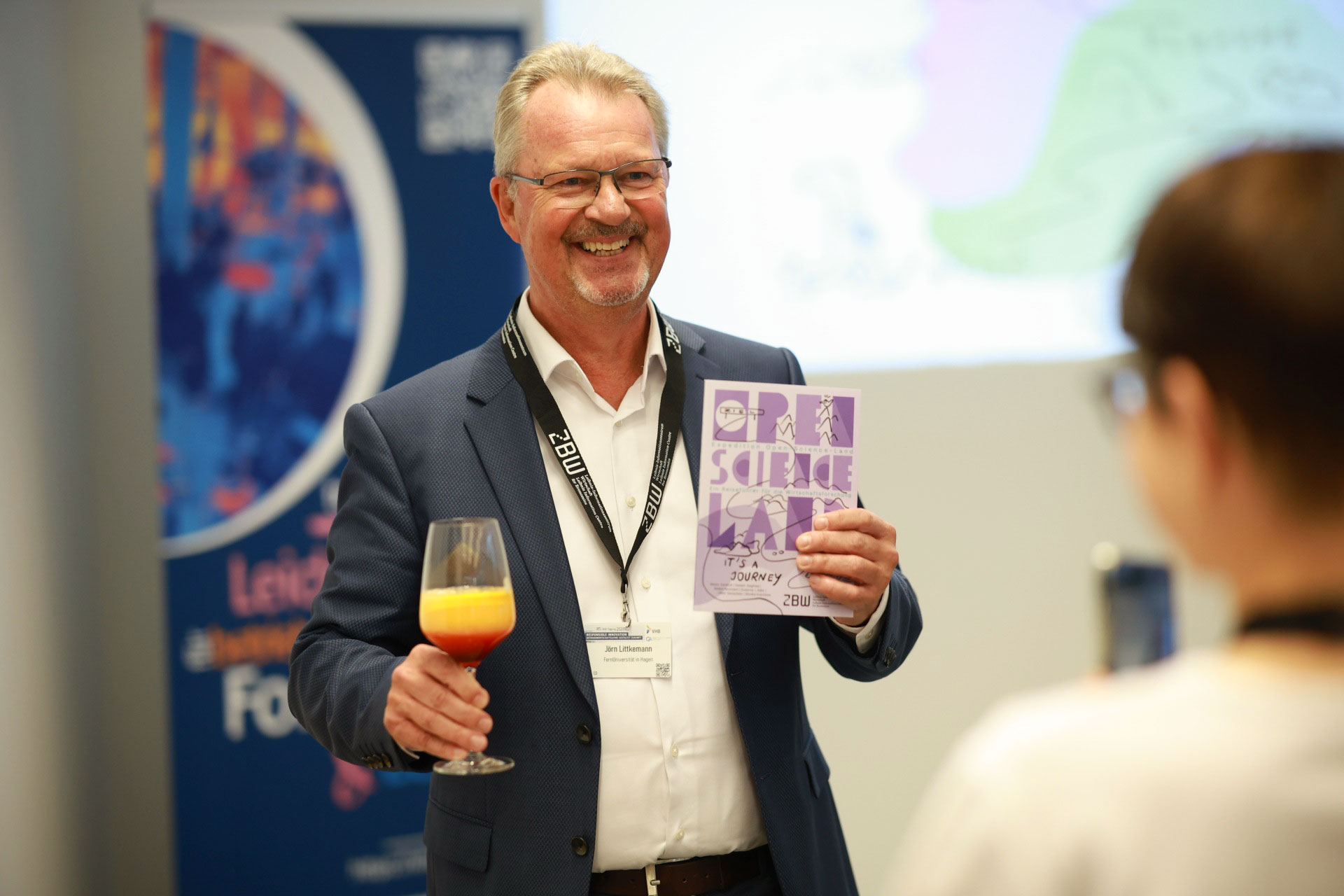
The event began with a thematic introduction by Marko Sarstedt and Susanne Adler, setting the stage for a presentation that consistently embraced the concept of the travel guide. The four organizers of the Open Science Happy Hour guided participants through “Open Science Land” not only in terms of content but also visually. We’re talking about flower necklaces, printed slogan T-shirts, and Hawaiian shirts featuring the guidebook’s cover, which gave the session the character of a small expedition. Even the introduction was designed in the style of a slide presentation – complete with the typical “click” sounds – thus adopting the language of travel. This was more than just decoration. The staging created a framework in which participation, curiosity, and openness were built in from the start. The guiding principle remained the idea of not only explaining Open Science but also making it visible through a concrete experience of just how much scientific traceability depends on good documentation. The flow proceeded accordingly, clearly from check-in with a passport through the introduction and interaction to the joint evaluation.
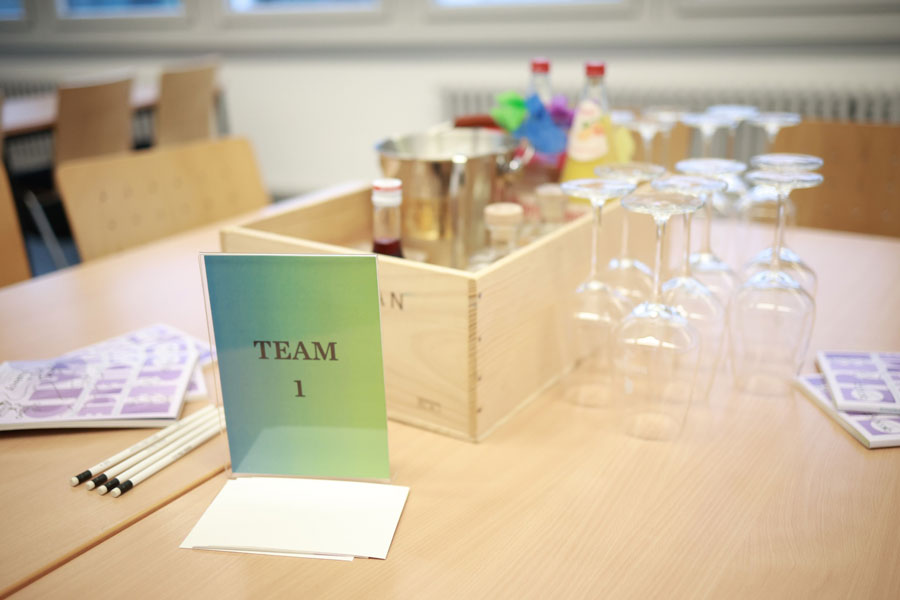
Mixing a Replication Cocktail
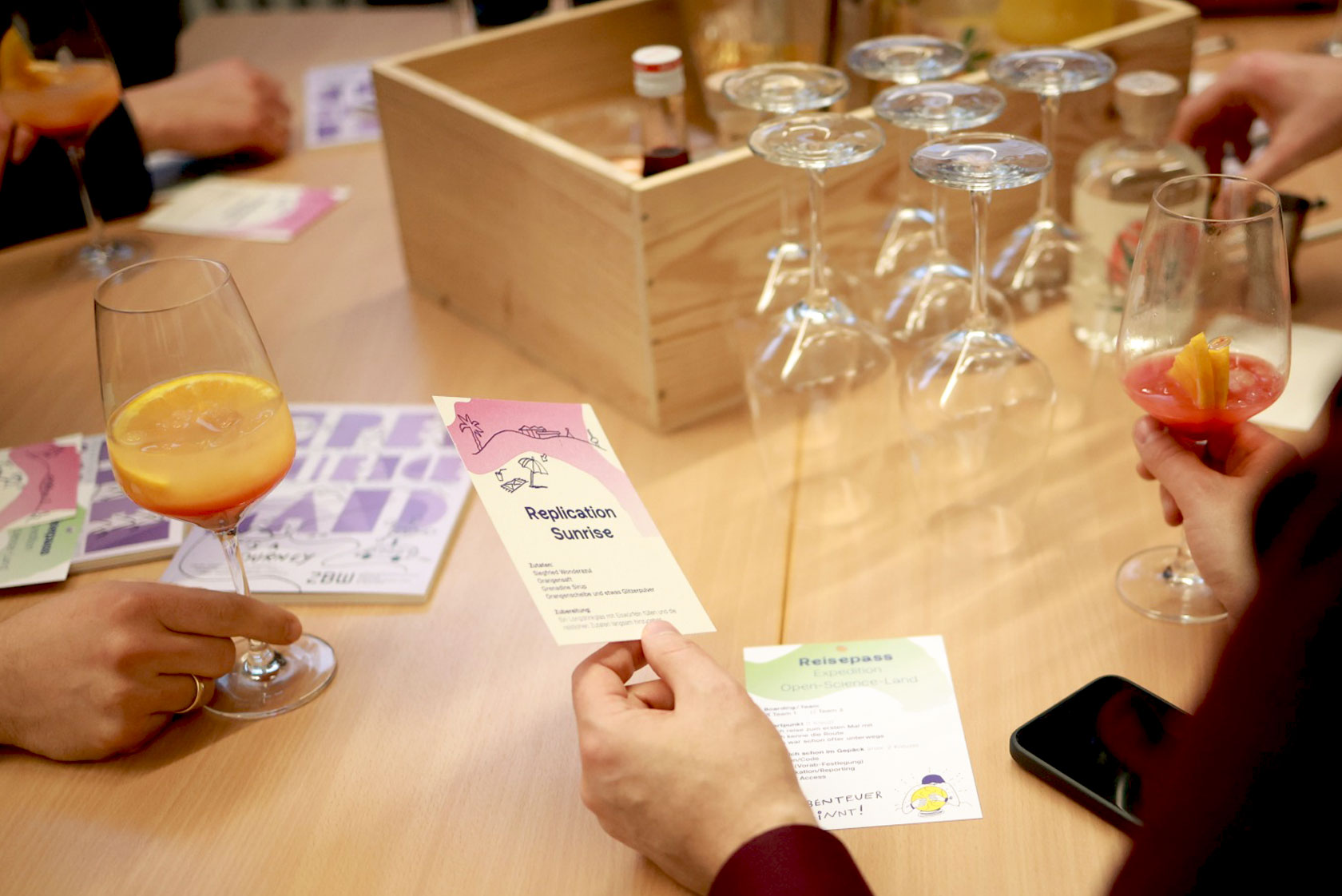
Central to the event was a replication game. The basic idea was as simple as instructive. Two teams were tasked with recreating a non-alcoholic cocktail, the “Replication Sunrise,” based on a recipe. Team 1 worked with an incomplete recipe, Team 2 with a complete one. Both groups thus had the same task but not the same information. It was precisely this difference that formed the didactic core of the exercise. For it translated a central problem of scientific work into a vivid situation. Whether a result can be reproduced depends not only on the will of those involved, but largely on how well materials, steps, and decisions are documented.
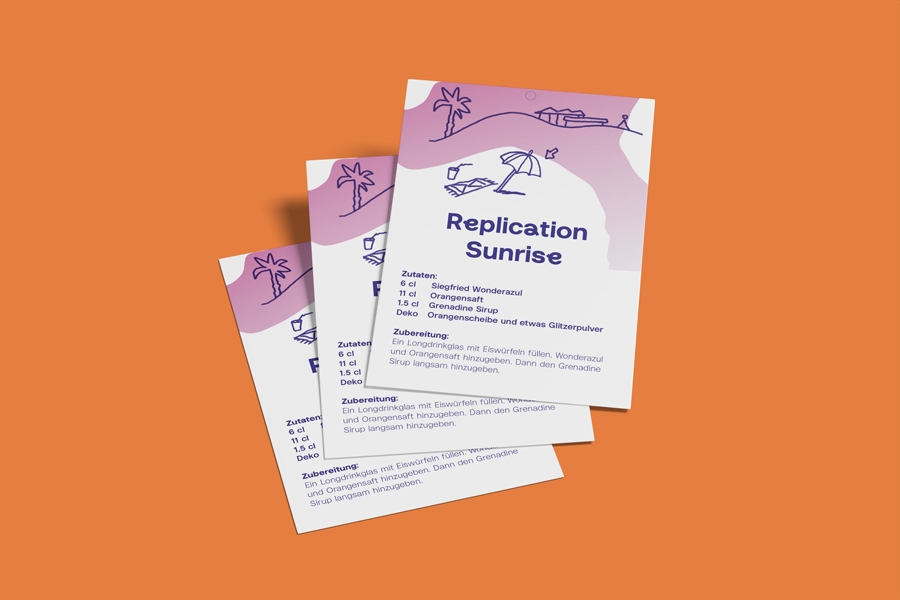
The game was therefore more than just a casual activity. It made a methodological problem tangible both physically and socially. Those with an incomplete recipe must fill in gaps, make assumptions, guess sequences, and deal with uncertainty. Those who, on the other hand, can rely on complete instructions work under different conditions. In just a few minutes, the exercise thus brought to light what in research often only becomes apparent after prolonged examination: missing information creates room for interpretation, and this room for interpretation affects the result.
Everyday translation demonstrates the problem
The translation was deliberately chosen because it remained understandable without prior methodological knowledge yet still captured the core of the problem. In its logic, a cocktail recipe is not unlike a research protocol. It requires information on ingredients, quantities, order, steps, and sometimes also on conditions that are implicitly assumed. If such information is missing, the result is open to variations. This experience could be directly observed at the hands-on station.
In addition, the replication game addressed multiple levels of learning simultaneously. First, it provided insight into the importance of completeness and precision in documentation. Second, it demonstrated that reproduction does not necessarily fail due to individual errors, but often due to even minor omissions.
Third, it facilitated the transfer to one’s own research practice. What information must be recorded in methods sections, codebooks, data documentation, or analysis protocols so that other researchers can follow a work process? The exercise thus offered not a simplistic metaphor, but a model for scientific work under realistic conditions of uncertainty and interpretation.
Missing recipe information prevents Longdrink replication
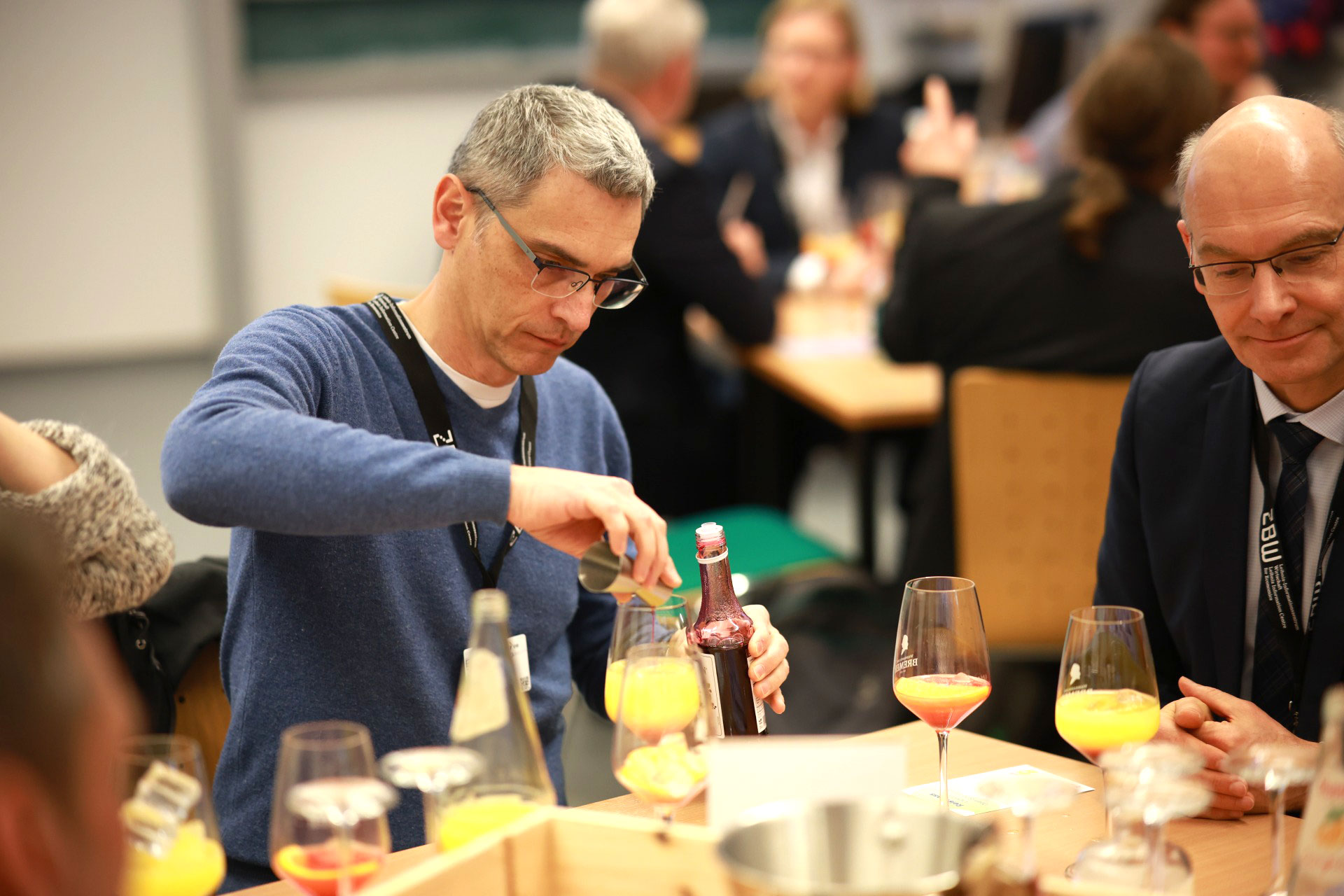
This learning effect was supported by the structure of the session itself. After checking in with a “passport” and a brief introductory talk, the task was introduced. The teams then worked in parallel on replicating the Longdrink. The hosts at the stations were instructed to provide only minimal assistance and specifically not to substitute the missing information. Phrases such as “The recipe doesn’t say anything about that” or the suggestion to make assumptions if necessary were part of the concept. This prevented the gaps in the material from being filled in retrospectively. Instead, the uncertainty remained and could later become the subject of reflection. At the end, the results were photographed and compared.
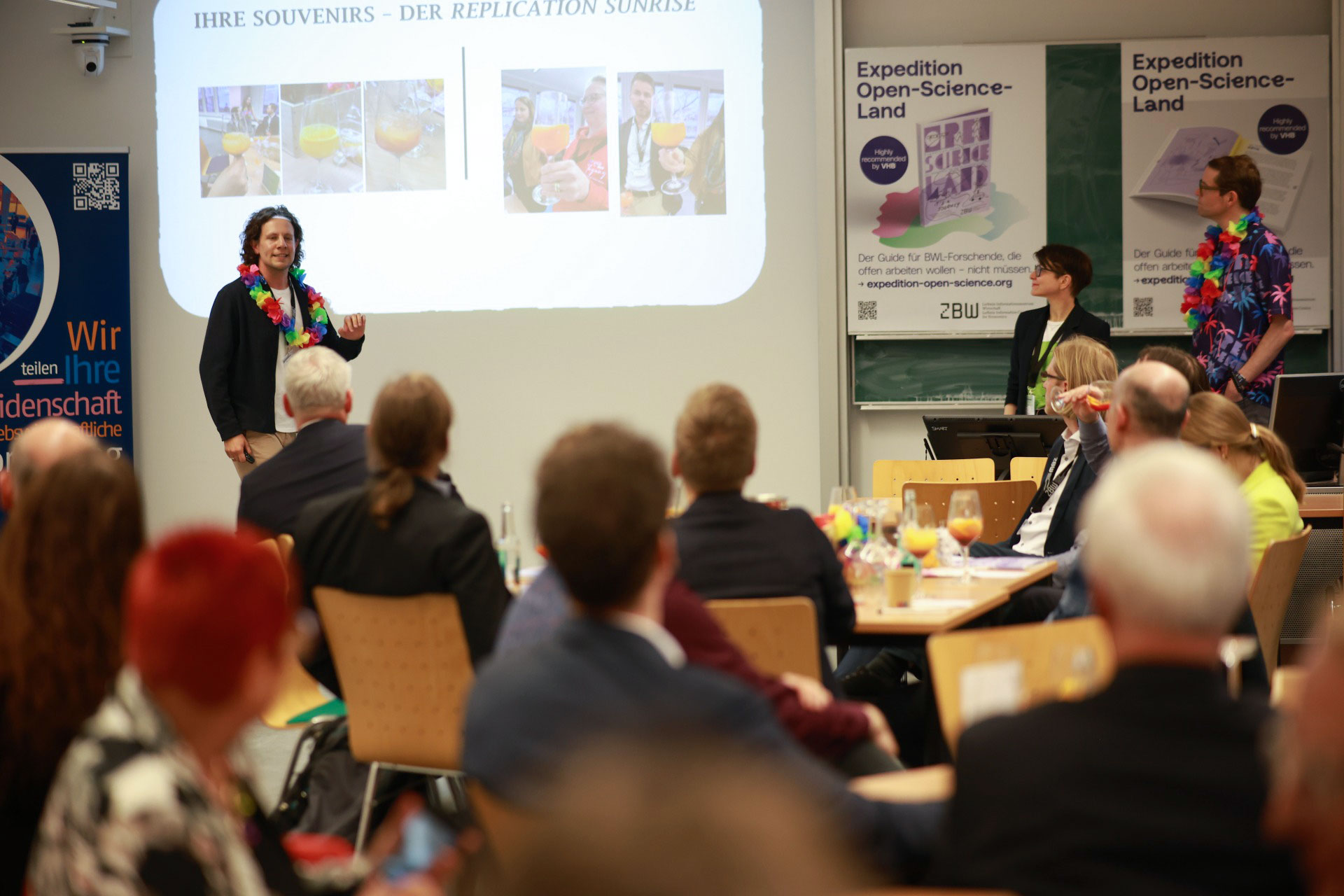
Joint Reflection on the Journey and the Recipe
The evaluation was therefore more than just a joint conclusion. It transformed the practical experience into scholarly reflection. In the plenary session, three key questions took center stage: What was feasible to implement? What was missing?
What could be improved in the recipe? While these questions formally focused on the cocktail, they clearly aimed at research processes. They drew attention to the conditions for good documentation, the importance of explicit decisions, and the quality of instructions intended for others to follow. This was complemented by a personal commitment in the “travel passport,” where participants could note a keyword for their own practice.
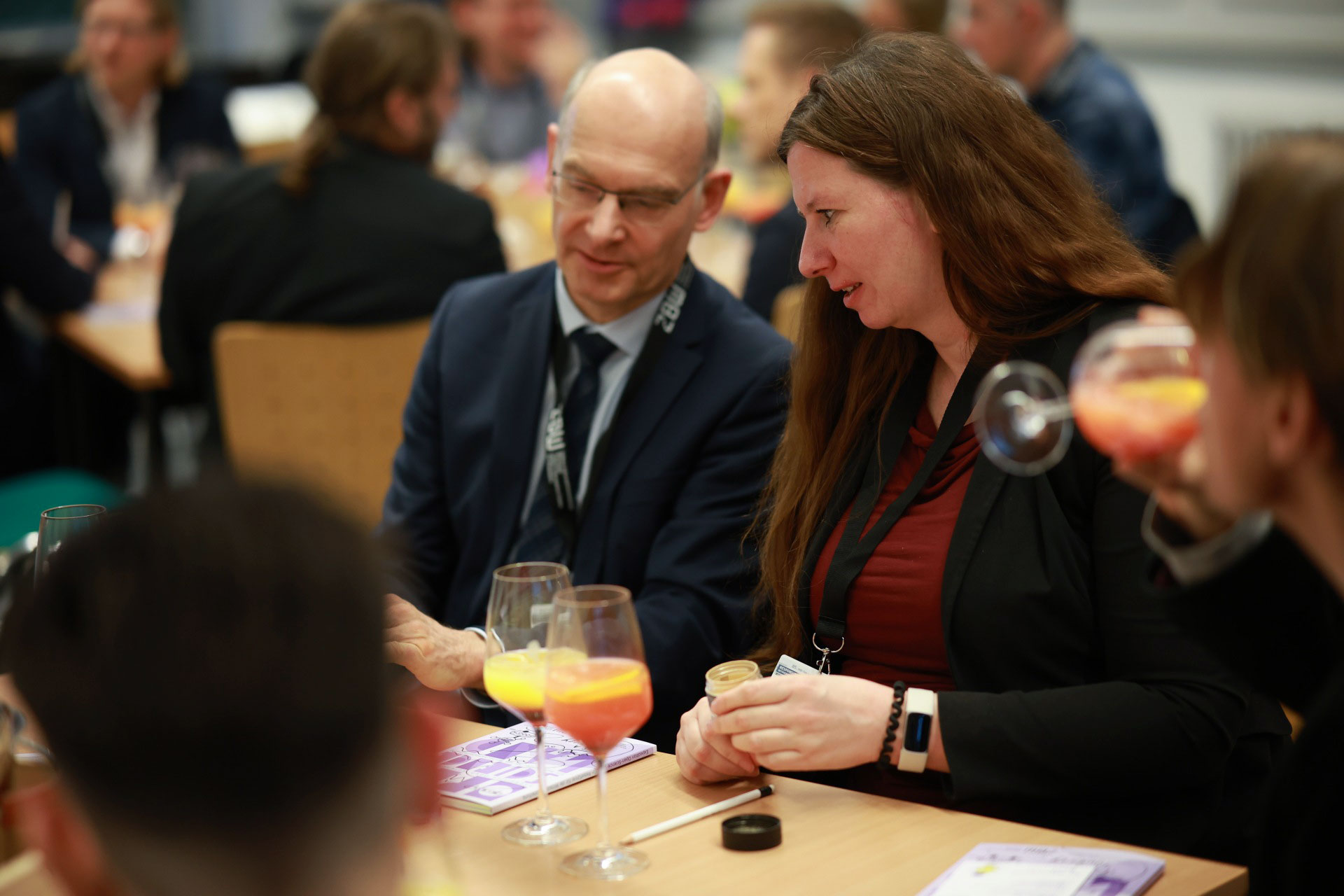
It was precisely in this combination of play, experience, and reflection that the strength of the format lay. The session did not aim to lecture, but to raise awareness. It relied on the idea that insight becomes more lasting when it arises from one’s own experience. This is particularly fitting for a topic like Open Science. After all, the relevance of open and transparent research is often revealed less through definitions than through situations in which it becomes clear what is lost when documentation is unclear. The replication game illustrated this insight without trivializing it.
This might also interest you:
- Expedition Open Science Land: A Travel Guide for Business Researchers
- Teaching Open Science: Slide Deck Supports Lecturers
- Open Science Study: Business Studies and Economics on Track for more Openness
- Gollum Effect Harms Research: Why Open Science Could Help Solve the Problem
Dr Doreen Siegfried is Head of Marketing and Public Relations at the ZBW – Leibniz Information Centre for Economics. She can also be found on LinkedIn.
Portrait: ZBW©
Photos: Karl Knerr©


Financing Diamond Open Access for Economics Sciences: How OLEcon Works

Open Science in Economics: Selected Findings From the ZBW Awareness Analysis 2022
Barcamp Open Science: We Need to Talk!
View Comments
Human Library: Breaking down prejudices with human books
Borrowing people instead of books? In times of social polarisation, new ways of...